

| Class Descriptions: | Training Dates: | Days and Times: |
|---|---|---|
| First Aid / CPR / AED | October 14, 2026 | Wednesday 8AM to NOON |
| Building Maintenance | October 26 - November 6, 2026 | Monday - Friday 8AM to 4:30PM |
| Sheet Metal Workshop | November 16-17, 2026 | Monday - Tuesday 8AM to 4:30PM |
| Framing & Sheetrock | December 7-11, 2026 | Monday - Friday 8AM to 4:30PM |
| Electrical Wiring (Evenings) | December 7-18, 2026 | Monday - Friday 5:30PM to 9:30PM |
| OSHA 10 (Evenings) Previous Students Only | December 8-10, 2026 | Tuesday - Thursday 5:30PM to 9:30PM |
| Introduction to Concrete | December 9-10, 2026 | Wednesday - Thursday 8AM to 4:30OM |
| Residential Framing | December 14-18, 2026 | Monday - Friday 8AM to 4:30PM |
| Building Maintenance | January 4-15, 2027 | Monday - Friday 8AM to 4:30PM |
| Carpentry (Evenings) | January 4-15, 2027 | Monday - Friday 5:30PM to 9:30PM |
| Anc: First Aid / CPR / AED (Evenings) | January 8, 2027 | Friday 5:30PM to 9:30PM |
| Laborers Scaffolding | January 19-20, 2027 | Tuesday - Wednesday 8AM to 4:30PM |
| Telecommunications Workshop | February 1-4, 2027 | Monday - Friday 4:30PM to 9:30PM |
| Building Maintenance | February 1-12, 2027 | Monday - Friday 8AM to 4:30PM |
| Laborers Scaffolding | February 16-17, 2027 | Tuesday - Wednesday 8AM to 4:30PM |
| Welding - Sheet Metal (Evenings) | February 22-25, 2027 | Monday - Thursday 5:30PM to 9:30PM |
| Power Tools (Evenings) | February 22 - March 5, 2027 | Monday - Friday 5:30PM to 9:30PM |
| Electrical Wiring Workshop | March 1-3, 2027 | Monday - Tuesday 8AM to 4:30PM & Wednesday 8AM to NOON |
| Building Maintenance | March 1-12, 2027 | Monday - Friday 8AM to 4:30PM |
| WIT Carpentry (Evenings) | March 22 - April 2, 2027 | Monday - Friday 5:30PM to 9:30PM |
| Laborers Concrete | March 23-24, 2027 | Tuesday - Wednesday 8AM to 4:30PM |
| Ironwork & Welding | March 29 - April 2, 2027 | Monday - Friday 8AM to 4:30PM |
| Sheet Metal - HVAC Workshop | April 12-13, 2027 | Monday - Tuesday 8AM to 4:30PM |
| Residential Framing | April 19-23, 2027 | Monday - Friday 8AM to 4:30PM |
| OSHA 10 (Evenings) Previous Student Only | May 4-6, 2027 | Tuesday - Thursday 5:30PM to 9:30PM |
| Plumbing | May 10-12, 2027 | Monday - Wednesday 8AM to 4:30PM |
| Anc: First Aid / CPR / AED (Evenings) | May 21, 2027 | Friday 5:30PM to 9:30PM |
AWP Training Information
Learn more about our available courses and get started with your free training today!
Free Training for Jobs that Pay
Trainings are offered in Anchorage, Mat-Su, Fairbanks & Kenai. Scroll down to see location schedules.
- Classes that are not designated for a particular program are eligible for anyone to apply.
- 16 and older are eligible to apply but some training requires you to be 18.
- (WIT) Women in the Trades – these classes are specifically for females only.
- (H2H) Helmets to Hardhats – these classes are specifically for Veterans, Transitioning Service Members, Guard and Reserves, and Active-Duty Spouses.
- Did you know that over 50% of new building trades apprentices have taken classes through AWP each year? Sign up today to continue your pathway toward a high-paying, fulfilling construction career.
Career Training at No Cost to You!
Health and Safety Training:
Free First Aid/CPR/AED Certifications
OSHA 10 training and Certification are available to former students only
Anchorage Training
Browse available training courses, schedules, and times for Anchorage and Chugiak.
MAT-SU Training
Browse available training courses, schedules, and times for the Mat-Su Valley.
| Class Descriptions: | Training Dates: | Days and Times: |
|---|---|---|
| Power Tools (Evenings) | October 5-16, 2026 | Friday 5:30PM to 9:30PM |
| Building Maintenance | December 7-18, 2026 | Monday - Friday 8AM to 4:30PM |
| MatSu: First Aid / CPR / AED (Evenings) | January 13, 2027 | Wednesday 5:30PM to 9:30PM |
| Introduction to Concrete | January 20-21, 2027 | Wednesday - Thursday 8AM to 4:30PM |
| Carpentry (Evenings) | January 25 - February 5, 2027 | Monday - Friday 5:30PM to 9:30PM |
| Power Tools | March 29 - April 2, 2027 | Monday - Friday 8AM to 4:30PM |
| OSHA 10 (Evenings) | April 27-29, 2027 | Tuesday - Thursday 5:30PM to 9:30PM |
| Residential Framing | May 10-14, 2027 | Monday - Friday 8AM to 4:30PM |
| MatSu: First Aid / CPR / AED (Evenings) | May 19, 2027 | Wednesday 5:30PM to 9:30PM |
Fairbanks Training
Browse available training courses, schedules, and times for Fairbanks.
| Class Descriptions: | Training Dates: | Days and Times: |
|---|---|---|
| Electrical Wiring | October 19-23, 2026 | Monday - Friday 8AM to 4:30PM |
| Carpentry | November 9-13, 2026 | Monday - Friday 8AM to 4:30PM |
| Power Tools | January 25-29, 2027 | Monday - Friday 8AM to 4:30PM |
| Introduction to Concrete | February 17-18, 2027 | Wednesday - Thursday 8AM to 4:30PM |
| Electrical Wiring | March 22-26, 2027 | Monday - Friday 8AM to 4:30PM |
| Pipe Trades | March 29 - April 2, 2027 | Monday - Friday 8AM to 4:30PM |
| Building Maintenance | April 5-16, 2027 | Monday - Friday 8AM to 4:30PM |
Kenai Training
Browse available training courses, schedules, and times for Kenai
| Class Descriptions: | Enrollment Period | Training Dates: |
|---|---|---|
| SESSION 1: Women in the Trades | August 21, 2026 - September 7, 2026 | September 21, 2026 - October 17, 2026 |
| SESSION 2: All Classes (Carpentry, Auto Mechanics, Electrical, Welding) | October 1, 2026 - November 5, 2026 | November 9, 2026 - December 5, 2026 |
| SESSION 3: All Classes (Carpentry, Auto Mechanics, Electrical, Welding) | December 1, 2026 - January 7, 2027 | January 11, 2027 - February 6, 2027 |
| SESSION 4: Roustabout Classes | February 1, 2027 - March 4, 2027 AND February 1, 2027 - March 18, 2027 | March 8, 2027 - March 12, 2027 AND March 22, 2027 - March 26, 2027 |
| SESSION 5: All Classes (Carpentry, Auto Mechanics, Electrical, Welding) | March 1, 2027 - April 1, 2027 | April 5, 2027 - May 1, 2027 |
Now is a Great Time to Get Started
Carpentry and Framing
Sheetrock and Taping
Plumbing and Pipefitting
Telecommunications
Electrical Wiring
Ironwork and Welding
Sheetmetal and HVAC
Heavy Equipment Operating and Mechanics
Building Maintenance
Construction Craft Laborer Training
AWP Class Descriptions :
Building Maintenance:
Training covers a broad range of building maintenance and repair skills. Topics include accurate use of a tape measure, trades math, safe use of hand, power, pneumatic, and air tools, wood and steel stud wall construction, door and hardware installation, sheetrock installation and repair, basic plumbing and electrical maintenance, flooring installation and repair, caulking and painting, vinyl window installation, and basic roof shingle replacement. Participants will also complete OSHA-10 and First Aid / CPR / AED training.
Carpentry:
Training covers basics of carpentry and trades math including accurate use of a tape measure with hands-on exercise cutting various shapes out of drywall to fit around wood shapes on a board. Proper use of hand and power tools. Proper layout with a hammer, saw, and nailing exercise. Hands-on projects with a worm drive circular saw cutting various wood blocks at different angles and degrees. Building a footstool using the skills obtained from using the circular saw. Math with a hands-on project of building wood stairs to a platform. Construction site, education, safety, and carpenter expectations are also covered.
Electrical Wiring:
Training covers basic electrical theory, electrical code, and tool safety. Hands-on training includes wiring of switches, GFCI receptacles, duplex receptacles, panels, 3-way and 4-way switches, and bending EMT conduit. Students apply the skills they learn by assembling and wiring a lamp with a light switch, outlets, and USB receptacles.
Electrical Wiring Workshop:
Training covers basic electrical theory, circuitry, and electrical/tool safety. Hands-on training includes proper splicing, wiring of switches, GFCI receptacles, duplex receptacles, split receptacles, 3-way and 4-way switches. Student apply the skills they learn by assembling and wiring several circuits that include light switches, light bases, and different style receptacles.
First Aid/CPR/AED:
Training covers adult CPR, AED use, and first aid skills for responding to medical emergencies in the workplace. Participants will learn how to recognize and respond to common injuries and medical emergencies and provide care until professional medical help arrives. Narcan (naloxone) training and kits are also provided.
Framing & Sheetrock:
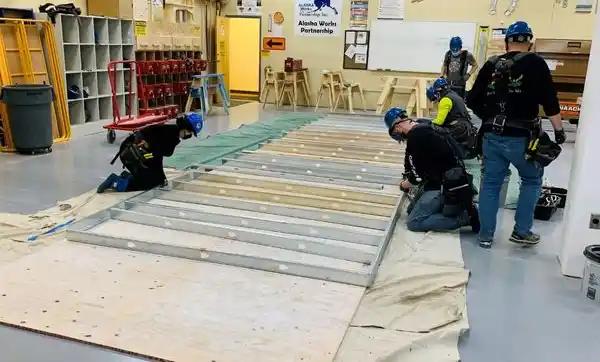
Training covers the basics of carpentry and trades math. Accurate reading and use of a tape measure, 3-4-5 layout method, and safe use of power tools. Hands-on covers layout and framing of walls which will be attached to partitions and squared. Material handling, storage, layout, cutting, application and installation of sheetrock, patch/repair of sheetrock. Participants also learn the difference between using metal and wood studs.
Laborers Concrete:
Training covers the basics of concrete construction, including jobsite safety, proper use of hand and power tools, concrete materials, placement techniques, and finishing methods. Participants will gain introductory hands-on experience while learning industry best practices for safe, efficient, and quality concrete work.
Laborers Scaffolding:
Training covers the basics of supported scaffolding, including scaffold safety regulations, fall protection, material handling, scaffold components, and the safe erection, inspection, use, and dismantling of scaffolding. Participants will learn industry best practices for working safely around scaffolding and gain an understanding of proper scaffold setup and use.
Heavy Equipment Mechanics Orientation:
Introductory level of instruction into Heavy Duty Mechanics. Students will be introduced to many different aspects of what Mechanics are faced with in the field. Students will be introduced to the industry of Heavy Duty Mechanics, safety and work place ethics. By the end of class each student will have better knowledge and skills to apply at their current job or help them secure new employment.
Heavy Equipment Operators Orientation:
Introductory level of instruction into Heavy Equipment Operating. Students will be introduced to many different aspects of what Operators are faced with in the field. Introduction to the industry of Heavy Equipment Operations, safety and work ethics. By the end of class each student will have better knowledge and skills to apply at their current job or help them secure new employment.
Intro to Concrete 101
Concrete 101 provides a foundational understanding of the concrete industry, covering materials, batching, fresh and hardened properties, testing, safety, and sustainability. Participants will learn about concrete’s components—cement, aggregates, and water—and its role as a versatile, cost-effective construction material. This hands-on course also includes practical training on formwork, focusing on installing job-built and manufactured forms, bridge forms, hardware, stairs, and the layout of walls and decks.
Ironwork & Welding:
Training covers vertical and horizontal stick welding, MIG welding, oxygen and acetylene cutting, hands-on tools and materials, hazard awareness, and work site safety. Identify and use safe welding practices, identify joint design and fit-up, set up a welding machine, and identify electrode selection. Participants learn basic steel rebar wire tying and steel reinforcing practices, basic structural ironworking and rigging practices.
OSHA 10: (Former Students Only)
Provides entry-level construction workers information about their rights and employer responsibilities and how to file a complaint. Emphasizes how to identify, abate, control, avoid and prevent job related hazards on a construction site. Covers a variety of construction safety and health hazards that a worker may come across on a job site.
Pipe Trades:
This introductory training provides hands-on exposure to the pipe trades industry. Participants will learn fundamental skills used in plumbing and pipefitting, including pipe installation, joining methods, tube bending, and basic welding applications. The training also introduces common tools, materials, and systems used throughout the trade while exploring career pathways in the pipe trades.
Plumbing:
Training covers basic plumbing codes and water heater fundamentals. Hands-on training includes PEX installation, soldering and brazing, plumbing fixtures, pipe cutting and fitting, and introductory welding. Participants will gain exposure to common plumbing and pipefitting tools, materials, and techniques used in the trade.
Power Tools:
Training covers basics of carpentry and trades math including accurate use of a tape measure with hands-on exercise cutting various shapes out of drywall to fit around wood shape on a board. Proper use of hand and power tools. Students will construct a small table and ladder shelf using compound miter saw, pocket hole jig, drill, impact driver, and sanders. Other power tools will be covered throughout the class.
Residential Framing:
Training covers basics of carpentry and trades math including accurate use of a tape measure with hands-on exercise cutting various shapes out of drywall to fit around wood shapes on a board. Proper use of hand and power tools. Training covers layout for wood framing using 16-24 in O.C. Constructing a floor, and walls with window and door openings. Convention gable roof framing techniques are also covered for the ridge, commons rafters, soffit, ceiling joists, and fascia rafters. The project includes a small building that can be taken home.
Sheet Metal Workshop:
This introductory training covers the basics of Sheet Metal Work. Learn to build 3-D objects from flat sheets of metal. Learn about HVAC systems and how to fabricate and install ductwork. Use your brain to calculate cut sizes, your hands to fabricate intricate sheet metal pieces and your brawn to install the piece where it belongs.
Sheet Metal - HVAC Workshop:
This introductory training covers the basic of HVAC-R Service Technician Work. Learn the basics of home heating systems. We will cover preventative maintenance and basic electrical troubleshooting. The refrigeration cycle will be discussed with it's many uses, followed by a brazing class for refrigeration piping.
Telecommunications Workshop:
Training includes both classroom and hands-on experience in fiber optic testing and splicing, twisted-pair cabling, category cable color codes and terminations, and wood pole climbing. Participants are introduced to the fundamentals of modems, switches, routers, and network interface devices. The program also provides insight into the telecommunications industry, with ongoing discussions about career opportunities, and workplace and apprentice expectations.
Welding - Sheet Metal
This introductory training covers the basics of 3 different types of welding. GMAW, GTAW and Laser.
*Trades basic skills training. **Trade Ready Training. Training that is part of a Quality Pre–Apprenticeship (QPA) Program. See the QPA Framework for more information under the Apprenticeship tab.
Minimum Qualifications:
Have a career interest in the trades, be at least 16 years of age. You must be 18+ for some trainings (Equipment Operating, Mechanics, Welding Fabrication, Service Oilers and others)
Have a photo ID, and Social Security card (A passport or Birth Certificate can also be used).
Other documents may be needed if selected.